
Sparkling Cyanide
Agatha Christie’s 1945 novel featuring Colonel Race with a 6-hour-30-minute audiobook: Sparkling Cyanide: Six people attend a restaurant dinner with a seventh place kept for Rosemary Barton, who died there one year earlier; suggested age: About 14+ (editorial).
- Book type
- Novel featuring Colonel Race
- First published
- 1945
- Suggested age
- About 14+ (editorial)
- Audiobook narrator
- Hugh Fraser
The story without spoilers
Sparkling Cyanide begins with a restaurant dinner and an empty place. Six people gather at a table laid for seven, remembering Rosemary Barton, who died there a year earlier. A sprig of rosemary marks her place. The arrangement makes memory part of the opening mystery: the diners share an occasion, but each brings a personal recollection of the woman being remembered.
The dinner revisits Rosemary’s death a year earlier, giving the mystery two occasions to distinguish. Cyanide poisoning is part of the premise, so consult the content notes if that subject is sensitive.
Can I start here?
This is a novel featuring Colonel Race. Colonel Race is a recurring Christie character within this novel outside the Poirot and Marple routes. Race also appears in The Man in the Brown Suit and in Poirot novels including Cards on the Table. His presence offers a connection across those different kinds of Christie story.
The restaurant premise supplies a clear reason to choose Sparkling Cyanide on its own terms. It is particularly relevant to a reader interested in a group assembled around a shared past. A reading project organised by investigators can place it on the Colonel Race route; a project organised by settings can put the restaurant beside Christie’s other socially contained mysteries.
There is a separate title distinction to know before buying. The novel appeared in the United States as Remembered Death. A collection containing the Poirot short story Yellow Iris is a different purchase. Sparkling Cyanide developed from that earlier story, but the full-length novel is the title to choose when seeking the Colonel Race book described here.
What stands out
Last checked October 2026
A table that makes absence visible
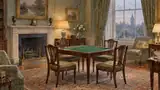
The extra place setting is a remarkably economical opening image. A dinner usually gathers people who are present; this one also gives a place to someone absent. The image supplies a practical way to organise the premise before learning every relationship. There are the people attending now, the person they remember, and the earlier occasion that gives the new meal its significance.
For reading notes, a simple division between the two dinners is more useful than immediately constructing a theory. Note what belongs to the earlier evening and what belongs to the commemorative gathering. That approach follows the announced situation without requiring predictions. It can also make a spoken reading easier to follow when a conversation moves between recollection and the present occasion.
Colonel Race outside a Poirot partnership
Race’s appearance makes this a useful title for readers exploring Christie beyond her two best-known detectives. An investigator can recur across books without making all those books part of the same style of adventure. The restaurant and remembrance premise offers a different point of entry from the travel of The Man in the Brown Suit.
That distinction helps when choosing a next read after a Poirot novel. Someone interested in another familiar professional figure can follow Race, while someone interested in a particular social arrangement can choose the dinner itself. Neither route requires ranking the detectives. Use the individual premise to choose the kind of Christie introduction that interests you.
A novel with an earlier short-story connection
The full-length Sparkling Cyanide and the short story Yellow Iris are related works, with different investigative arrangements. This is useful bibliographical context for readers sorting collections or recordings. Yellow Iris identifies the separate shorter story associated with the novel’s origins. Equally, the American title Remembered Death identifies Sparkling Cyanide, rather than an additional novel to add to a reading total.
These distinctions matter particularly for audio listeners. A dramatic production, a short-story recording and an unabridged novel may all have an association with the restaurant premise. Looking at the named work and its format prevents an accidental duplicate or an unexpected shorter purchase. The selected recording below is Hugh Fraser reading the full novel.
Content notes and suggested age
Contains fatal poisoning, grief and recollection of a distressing death. Suggested age: about 14+ (editorial). Adults selecting for a younger reader should consider the emotional weight of remembering someone who died in a public place, as well as the murder investigation. The dinner’s memorial purpose is central to the opening, rather than a background detail that can be separated from it.
A useful preliminary discussion concerns the difference between knowing somebody and agreeing about them. A shared acquaintance does not give a group a single shared memory.
Book and screen
Last checked October 2026
Sparkling Cyanide was adapted as television films in 1983 and 2003. The 1983 production starred Anthony Andrews. A BBC Radio 4 dramatisation followed in 2012. These are separate adaptations, with their own scripts and performances; they should be distinguished from the selected unabridged reading by Hugh Fraser.
For somebody arriving from a screen version, the useful print identifier is the novel title and author. A familiar production title does not identify an audiobook format. A cast recording gives actors distinct speaking roles, whereas a narrated novel gives one reader responsibility for the prose and dialogue. Choosing consciously between those experiences helps match the purchase to the intended reading.
Main characters
- Rosemary Barton: the woman whose death is remembered at the restaurant gathering.
- Colonel Race: Christie’s recurring investigator, appearing here outside a Poirot-led case.
- The assembled diners: six people attending a meal with a seventh place kept in Rosemary’s memory.
The opening is easiest to organise around each person’s relationship to Rosemary. A relationship note is different from a judgement about guilt: its purpose is simply to identify who knew whom. The carefully numbered table then provides a physical frame for a story whose introductory material includes both an earlier evening and the act of remembering it.
Publication and editions
Last checked October 2026
Sparkling Cyanide was first published in 1945; the United States edition used the title Remembered Death. The selected UK paperback is HarperCollins ISBN 9780008196332, published on 9 February 2017, with 288 pages. The later paperback publication date belongs to that edition, rather than to the novel’s original appearance.
Hugh Fraser narrates the English unabridged audiobook selected here. Its running time is 6 hours 30 minutes. That is distinct from the BBC dramatisation, which is a cast production. The Christie audiobook guide provides a route for comparing recordings by narrator and format before selecting another title.
Is it worth reading?
Our verdict: Sparkling Cyanide suits readers drawn to a tightly defined social gathering whose shared history matters as much as its seating plan. The empty place and anniversary dinner give it a clear introductory identity. Colonel Race supplies a recurring-detective connection for readers moving beyond Poirot, while the distinction between novel and related short story is useful when building a Christie shelf. Choose it for the restaurant gathering and remembrance premise.
Buy or listen
Retailer links may earn us a small commission at no extra cost to you.
Listen on AudibleBuy from AmazonAs an Amazon Associate we earn from qualifying purchases.
Paperback · ISBN 9780008196332
Audio · Hugh Fraser · 6 hours 30 minutes
Check the edition before buying.
Where next

Sources
Retailer links may earn us a small commission at no extra cost to you.
