Suzanne Collins writes about young people living with war, power and responsibility: start with The Hunger Games for teenage dystopian fiction, or Gregor the Overlander for a younger fantasy reader. Panem and the Underland are separate worlds, each with a five-novel sequence.
Her autobiographical picture book Year of the Jungle approaches a parent's wartime absence through a much younger child's experience.
Two worlds, different doors
The Hunger Games begins with sixteen-year-old Katniss Everdeen taking her younger sister's place in a televised fight to the death. Panem's wealthy Capitol imposes the competition on its districts, forcing children to kill children. Family need, public performance and political authority are therefore part of the opening situation together.
A reader is asked to consider a young person's immediate survival within a system that turns that danger into entertainment.
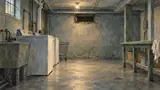
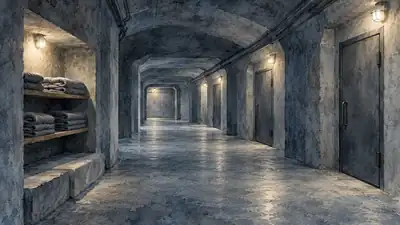
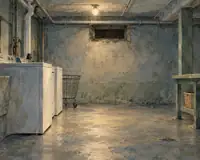
Gregor the Overlander opens in New York, where an eleven-year-old boy follows his little sister through an opening in their building's laundry room. Beneath the city is the Underland, inhabited by humans alongside enormous creatures, including rats, spiders and cockroaches. Gregor wants to go home, while a prophecy gives his arrival a significance he never sought.
The entrance belongs to an everyday urban building; the journey beyond it belongs to fantasy.
Confirmed: Collins describes both worlds as ways to explore questions about just war theory. That is a useful connection between the two series, but their intended audiences, protagonists and quests differ. Gregor has a younger lead and an underground quest; Katniss confronts a state-organised spectacle built around adolescent deaths.
Neither the fantastical creatures nor the familiar household entrance make the Underland's conflicts harmless, and the lower age guidance deserves to sit alongside its violence notes.
Panem: the trilogy and two prequels
The publication route begins with The Hunger Games, continues through Catching Fire and Mockingjay, then moves to The Ballad of Songbirds and Snakes and Sunrise on the Reaping. The second and third novels continue Katniss's story in that sequence.
The original trilogy follows one central character across three connected novels; the two later books have different central figures and earlier settings within Panem.
The prequels change both period and central viewpoint. The Ballad of Songbirds and Snakes centres on eighteen-year-old Coriolanus Snow, a student assigned to mentor a District 12 tribute during the tenth Hunger Games. It takes place sixty-four years before the original novel.
That puts the competition at an earlier stage and moves the opening perspective from someone selected to fight to someone preparing a participant for it.
Sunrise on the Reaping begins around the fiftieth Games, twenty-four years before Katniss's first novel. Its young central character is Haymitch Abernathy, and the Second Quarter Quell takes twice the usual number of tributes. Its fiftieth Games come forty years after Ballad's tenth Games, giving the two prequels different periods within the history of the same institution.
The two approaches to order answer different interests. Publication order introduces the world through Katniss before returning to its earlier periods. Panem chronology places Ballad first, Sunrise second, then the original trilogy.
Someone who wants an initial encounter with the world as it was first presented can use publication order; a returning reader tracing the historical arrangement can follow the prequels first. The books-in-order guide keeps those lists separate from the Underland sequence.
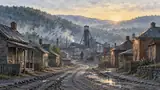
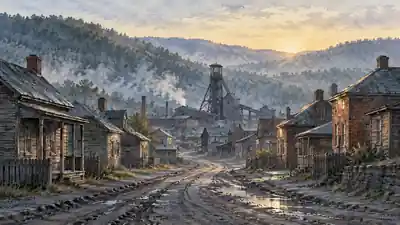
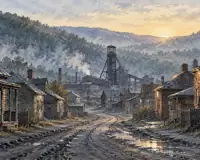
Illustration: dawn along a quiet mining street
The Underland: five connected adventures
Gregor the Overlander starts a continuous five-book route. It is followed by Gregor and the Prophecy of Bane, Gregor and the Curse of the Warmbloods, Gregor and the Marks of Secret, and Gregor and the Code of Claw. The later titles continue Gregor's adventures in that order.
Starting at the first book introduces the surface-world family and the underground setting before subsequent volumes build upon them.
The five-book sequence offers a different commitment from sampling unrelated novels. Its recurring world gives names, places and relationships cumulative importance. For a family choosing a first long fantasy series, that makes the opening volume a useful trial of the setting and of the reader's response to danger.
It also gives a clear stopping point before deciding whether to continue with four more novels.
Gregor's relationship with his younger sister is present from the premise. Taking a small child into an unfamiliar place brings practical responsibility into the fantasy adventure: the journey concerns someone who needs care as well as someone expected to act.
A reader drawn to sibling stories can begin with that relationship, while a reader chiefly interested in imagined societies can begin with the humans and creatures sharing a hidden environment.
The selected Scholastic UK paperbacks all belong to the reissue published on 7 May 2020. Their lengths range from 256 pages for the first two books to 336 for the fifth. These are edition lengths, useful for choosing a copy and judging the physical size of the books.
Follow Gregor’s numbered adventures in sequence, keeping the shared reissue dates with the editions.
Choosing by age and by subject
Last checked October 2026
Editorial guidance: thirteen and over for the Panem novels. They contain children killing children, violence, death and coercion by the state. The competition is the organising premise, not a passing incident. An appetite for fast adventure or a familiar film title should therefore be weighed alongside the subject itself.
A reader who finds threats to children particularly distressing has a direct reason to consider another series.
The selected UK Hunger Games paperback is marketed for ages thirteen to eighteen. The novels also attract adults interested in the relationship between an individual and an oppressive political system. The wider readership encounters the same adolescent perspective at the heart of the novels.
Katniss's immediate obligations to her family and the public role imposed on her are the grounds from which the larger questions emerge.
Editorial guidance: nine and over for the opening Underland books, with ten and over for the later war-focused volumes. Fantasy violence, warfare and danger to children occur in this sequence. Gregor and the Curse of the Warmbloods adds disease and biological warfare to the subjects families may wish to consider.
Illness is therefore another relevant consideration for families choosing the third volume, alongside the sequence's fantasy-war subjects.
Reading ability and readiness for subject matter are separate considerations. A confident younger reader may handle the vocabulary of a novel while finding its threats difficult. An adult reading alongside a child can pause when an image or question needs discussion.
The starting routes compare Gregor’s underground quest and Katniss’s televised contest, the kind of commitment involved and the relevant age guidance, rather than treating a single age as a decision for every household.
Year of the Jungle: a child's view of absence
Year of the Jungle is an autobiographical picture book illustrated by James Proimos. Young Suzy's father has gone to war in Vietnam, and she tries to understand his absence through the passing months, familiar holidays and arriving postcards. The subject moves from an imagined society to a child's limited understanding of a real family separation.
Confirmed: Collins based the book on the year her father was deployed while she was in first grade. She describes it as an approach to war for a picture-book audience, alongside the middle-reader Underland novels and the young-adult Panem books. Its format makes room for Proimos's illustrations and the child's perspective to work together.
The adult reader brings knowledge that Suzy cannot yet have.
The editorial starting age here is seven, with an adult available to discuss wartime anxiety and separation from a parent. Scholastic's UK shop places the book in its seven-to-eleven range. A picture book can be read slowly, returned to and discussed, even when its sentences are accessible to a much younger child.
The decision concerns the child's relationship to the subject as well as the number of words on a spread.
The confirmed UK-distributed edition is the forty-page Scholastic US hardback, ISBN 9780545425162, dated 11 September 2013 in the UK catalogue. That particular edition is currently marked unavailable by Scholastic's UK shop. A library copy or a bookseller's copy should be matched to the format and ISBN; a novel boxed set will not contain this separate picture book.
Illustration: evening light along a deserted platform
The writer behind the two worlds
Last checked October 2026
Collins began writing for children's television in 1991 and worked as head writer on Clifford's Puppy Days. James Proimos encouraged her to try writing children's books after they worked together in television. Those connections give Year of the Jungle's illustrator another place in her writing history beyond the picture book's credits.
Her account of Gregor's beginnings starts with Alice in Wonderland and a change of environment. For a child in New York, an opening into the ground might be a manhole rather than a rabbit hole. The idea replaces a pastoral entrance with an urban one, then asks what could exist below it.
The author biography connects that thought to the five-part fantasy and war series.
Ballad's earlier Panem also has a deliberate imaginative setting. Collins discusses postwar reconstruction, food shortages and damaged infrastructure in her conversation with David Levithan. Those conditions help explain why the prequel's society should be considered at its own point in time.
A reader interested in world-building can compare the questions raised by an earlier version of Panem with the original novel's introduction to the Capitol and districts.
The same interview connects Snow's story to Enlightenment arguments about the state of nature. That provides an intellectual route into the novel for someone interested in political thought, while the opening mentor assignment supplies a concrete dramatic problem. The philosophical connection describes an author's concern.
Readers can examine the decisions made within the fiction without treating a character's ideas as the author's endorsement.
The Panem films
Last checked October 2026
Season or film → source book
Retailer links may earn us a small commission at no extra cost to you.
Five Panem films have been released, and a sixth, Sunrise on the Reaping, is scheduled for UK cinemas on 20 November 2026. The original three novels became four films because Mockingjay was divided into two parts. Ballad has its own adaptation, followed by the forthcoming Sunrise film. The corresponding novel gives each screen adaptation its place in the reading sequence.
2012The Hunger Games · Released
2013The Hunger Games: Catching Fire · Released
2014The Hunger Games: Mockingjay – Part 1 · Released
2015The Hunger Games: Mockingjay – Part 2 · Released
2023The Hunger Games: The Ballad of Songbirds and Snakes · Released
2026The Hunger Games: Sunrise on the Reaping · Forthcoming as of24October2026; UKcinemas20November2026
Gary Ross directed The Hunger Games from a screenplay credited to Ross, Suzanne Collins and Billy Ray. Jennifer Lawrence, Josh Hutcherson and Liam Hemsworth head a cast that also includes Elizabeth Banks, Woody Harrelson, Stanley Tucci and Donald Sutherland. The UK cinema version was classified in 2012, with a separate international cut appearing in the home-entertainment catalogue.
Viewers choosing a disc or download should match the version and its rating.
Francis Lawrence took over as director for Catching Fire. The screenplay credits are Simon Beaufoy and Michael deBruyn. Jennifer Lawrence, Hutcherson and Hemsworth return, joined in the credited cast by performers including Philip Seymour Hoffman and Jeffrey Wright.
The change of director is a production distinction between the first two films, while the book sequence still runs from the first novel directly into Catching Fire.
Lawrence also directed both Mockingjay films, released in successive UK cinema years, 2014 and 2015. Julianne Moore appears among their principal cast alongside the continuing original leads. For a viewer moving back to print, both films correspond to the same third novel.
Their Part 1 and Part 2 labels are film divisions, so a search for a fourth novel called Mockingjay Part 2 would lead away from the original trilogy's actual structure.
That connection supplies a direct reading choice for someone who first encountered this earlier period through the film.
Joseph Zada plays young Haymitch in Sunrise, with Jesse Plemons, Ralph Fiennes, Glenn Close, Kieran Culkin, Elle Fanning, Mckenna Grace, Maya Hawke, Whitney Peak and Kelvin Harrison Jr. among the other credited cast members in the adaptation. Billy Ray is the screenwriter, and Nina Jacobson, Brad Simpson and Francis Lawrence are the producers.
The UK cinema date is 20 November 2026, so the film is forthcoming at this guide's 24 October update. Its cinema classification is a separate part of the production's release preparations; the classification date is distinct from the scheduled public opening.
Choosing a book after a film
For the original films, follow the corresponding novel position: The Hunger Games first, Catching Fire second and Mockingjay third. A viewer who has finished only Mockingjay – Part 1 has encountered one part of the third novel's screen adaptation. Reading the complete novel goes beyond that film's stopping point.
The separate prequel titles make their source books easier to match by name, with Ballad preceding Sunrise in publication order.
Film age ratings apply to a particular screen version. The novels' editorial age guidance concerns the written works, including the central Panem premise of children killing children. A household choosing between print, audio and film should consider the relevant content notes for each format.
Questions readers ask: On screen
Last checked October 2026
Which book is The Hunger Games based on?
The Hunger Games film adapts Collins’s novel The Hunger Games, the first Panem book. Gary Ross directed the 2012 film with Jennifer Lawrence as Katniss. Catching Fire has its own adaptation, while Mockingjay became two films from one novel; the Part 1 and Part 2 screen labels do not identify two different source books.
Should I read the Suzanne Collins book before watching?
The Hunger Games and Catching Fire each have a corresponding film, while Mockingjay became two films from one novel. Reading Mockingjay after seeing only Part 1 goes beyond that film’s stopping point.
The Ballad of Songbirds and Snakes and Sunrise on the Reaping have separate prequel source books; a film list therefore contains a different number of entries from the Panem novel list.
Where can I check the Suzanne Collins adaptations’ availability?
Check a UK streaming service for the exact Panem film, including the part number if choosing Mockingjay. The five released films run from The Hunger Games in 2012 to The Ballad of Songbirds and Snakes in 2023.
Sunrise on the Reaping remains scheduled for UK cinemas on 20 November 2026, so it is not described here as an available streaming film.
Illustration: quiet lamplight beneath the surface
Listening routes and selected voices
Tatiana Maslany performs the selected unabridged recordings of the original trilogy: The Hunger Games runs ten hours thirty-five minutes, Catching Fire eleven hours three minutes, and Mockingjay eleven hours nineteen minutes. Following that trio keeps the same performer across Katniss's sequence. The audiobook guide provides the individual editions and a running-time comparison.
The prequels have separate voices. Santino Fontana reads Ballad for sixteen hours sixteen minutes, and Jefferson White reads Sunrise for twelve hours forty-eight minutes. Their different central characters and periods give a listener specific reasons to sample both performances. Listening in publication order still leads from Maslany's trilogy to Fontana and then White.
Paul Boehmer narrates all five selected English Underland recordings on Audible UK. Their running times range from six hours thirty-two minutes for Prophecy of Bane to nine hours four minutes for Code of Claw. Audio changes how the words are encountered, while the fantasy violence and war subjects remain relevant to the choice for a younger listener.
A route into the tent
Our verdict: choose The Hunger Games for a first encounter with Panem, and Gregor the Overlander for a younger reader ready for a continuous fantasy adventure. The prequels add other periods and viewpoints after the original trilogy; Year of the Jungle makes a separate shared-reading choice about a parent's wartime absence.
Let the opening situation and the content notes decide which of those doors suits the reader in front of you.
Four opening viewpoints
These four leads introduce different positions within Collins's two worlds: a tribute, a mentor, a young person facing selection, and a boy drawn into an underground quest. Their first responsibilities help distinguish the books before any later decisions or outcomes enter the picture.
Katniss Everdeen: a sister's responsibility
Illustration: a quiet street in the mining district
Katniss is sixteen when she takes her younger sister's place in the Hunger Games. Her opening connection is to District 12 and the family she must consider while facing a public competition. That puts a private obligation beside the Capitol's demands from the beginning. The first novel introduces her as someone for whom survival is already a familiar concern.
Her family tie is the immediate reason for her action, before the larger competition takes over her day.
Coriolanus Snow: a student's ambition
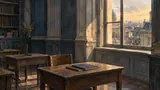
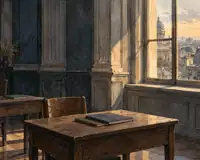
Illustration: afternoon light over an empty desk
Snow is an eighteen-year-old Capitol student assigned to mentor a District 12 tribute at the tenth Games. His family has lost its former wealth, and he sees the assignment as a chance to advance. Ballad's opening therefore places educational competition and status beside the deadly arena.
His responsibilities begin outside the contest itself, giving the prequel a different point of entry from Katniss's. His position directs attention towards ambition within the Capitol, alongside the tributes’ very different situation.
Haymitch Abernathy: the morning of the reaping
Illustration: morning beside an empty meadow bench
Young Haymitch lives in District 12 as the fiftieth Hunger Games approach. The Second Quarter Quell will select twice as many tributes as usual. The Sunrise premise begins with his wish to get through the day and remain close to the people he loves.
That immediate scale matters: the opening concerns home and the threat of separation before the rest of the novel supplies its consequences. The increased number selected makes the public ceremony a particular danger to his district and its families.
Gregor: an older brother in an unfamiliar world
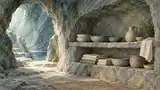
Illustration: shadows beyond the laundry room
Gregor is eleven, and his little sister's movement through a laundry-room opening leads him into the Underland. His initial wish is to return home. The first Underland adventure connects that ordinary family relationship to an extraordinary environment and a prophecy. Caring for a younger sibling gives the quest a practical concern alongside its imagined creatures and societies.
His younger age and care for Boots establish a different family viewpoint from the teenage Panem leads.
Awards and milestones
Sunrise on the Reaping sold more than 1.5 million World English copies in its first week of publication in 2025. It appeared simultaneously in print, digital and audio in the United States, Canada, the United Kingdom and Ireland, Australia and New Zealand. The five Panem novels include the original trilogy and two later-published prequels.
Begin with The Hunger Games for Katniss’s introduction, then read the trilogy before the prequels in the publication-order route. Collins’s five Underland novels form a separate fantasy sequence, beginning with Gregor the Overlander. Compare the series’ different editorial ages and individual content notes when choosing for a younger reader.